
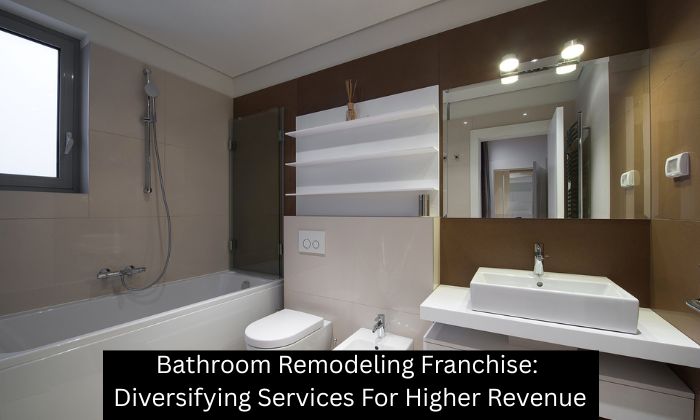
Bathroom Remodeling Franchise: Diversifying Services For Higher Revenue
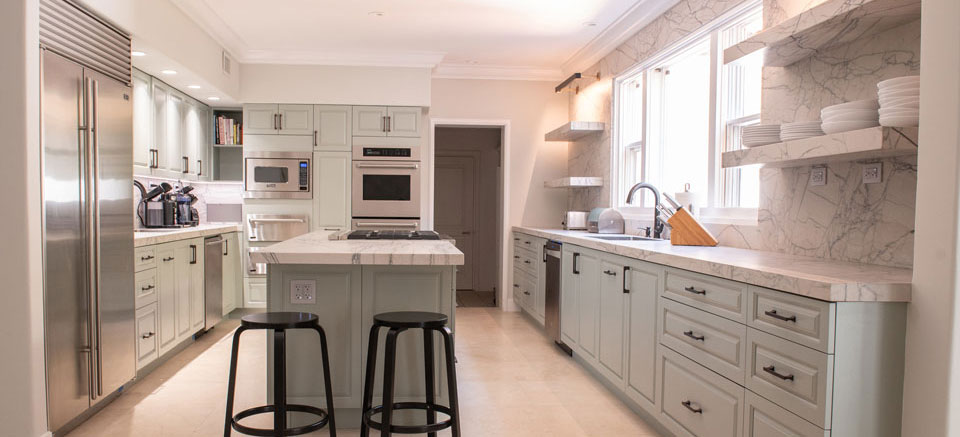
Adding bathroom remodeling to a kitchen business is one of the most natural ways to grow revenue, because it reaches the same customers, uses overlapping skills, and taps demand that runs year-round. A homeowner updating a kitchen often has a tired bathroom too, and a business that can do both captures work it would otherwise hand to a competitor. Here is why diversifying into bath makes sense, and how it fits a franchise model.
Why Add Bathroom Remodeling To A Kitchen Business?
Kitchens and bathrooms are the two most common remodeling projects in American homes. They draw the same homeowners, often at the same time. A customer who trusts you with their kitchen is an easy yes for their bathroom, and the reverse is true as well.
For a business, that overlap is valuable. You are already in the home, you already have the relationship, and you already have the credibility. Adding bath work lets you earn more from each customer relationship instead of starting from scratch to find a new one. That is the cleanest kind of revenue growth there is.
How Does Diversification Raise Revenue?
Several ways, and they stack:
• A higher average revenue per customer, since one client can buy both a kitchen and a bath project
• More projects from your existing lead flow, without proportionally more marketing spend
• Cross-selling, where a kitchen consultation surfaces a bathroom need and the other way around
• Smoother scheduling, since bath projects can fill gaps between larger kitchen jobs
• A wider net, reaching homeowners whose first priority is the bathroom rather than the kitchen
Diversification also steadies the business. When kitchen demand softens in a given season or market, bathroom work can help fill the pipeline. Two related service lines are more resilient than one.
Why Is Bathroom Demand Durable?
Bathroom remodeling rides the same forces as kitchens, plus one of its own. Homeowners are staying in their homes and investing equity into them. The National Kitchen and Bath Association points to aging-in-place renovations as a major driver of remodeling growth, and bathrooms are central to that.
Aging-in-place is the extra driver. As homeowners get older and choose to stay put, bathrooms often need adapting for safety and accessibility, things like walk-in showers, better lighting, and universal-design features. That creates bathroom demand that is somewhat independent of style trends, because it is driven by how people want to live in their homes for the long term. For a business, that is a steady, demographic-backed source of work.
Do The Skills And Systems Carry Over?
Largely, yes, which is what makes the addition efficient. Bathroom remodeling draws on the same core competencies as kitchen work: design consultation, sourcing materials, managing skilled trades, scheduling, and delivering a clean, on-time project with a great finish. An owner who has the systems for kitchens has most of what bath work requires.
That overlap is exactly why it belongs in a franchise model rather than as a separate business. The training, vendor relationships, and customer experience that support kitchen work extend naturally to bathrooms. You are widening an existing business, not bolting on an unrelated one.
How Does Kitchen Solvers Approach Bath Work?
Bathroom remodeling is already part of the Kitchen Solvers model, alongside kitchen remodels, cabinet refacing, and countertops. Owners are not adding a foreign service line. They are operating a system that already spans both rooms.
The same advantages apply across kitchen and bath:
• A vendor management program with a wide product range and preferred pricing
• The Pleasant Remodeling Experience, with care for the home and minimal disruption
• A consultative, no-high-pressure sales approach that surfaces the customer’s full set of needs
• Training and ongoing support that covers the business across services
• A home-based, cash-based model that keeps overhead low as you grow
The consultative approach matters here. An owner who listens well during a kitchen consultation often learns the customer is also unhappy with a bathroom, and can help with both. That is diversification working the way it should, more value for the customer and more revenue for the business, from one trusting relationship.
What Other Services Round Out The Model?
Bathrooms are the most natural addition to a kitchen business, but they are not the only one. Within the Kitchen Solvers model, owners also handle cabinet refacing and refinishing and countertops, which connect to both kitchen and bath work. A single customer might reface their kitchen cabinets, add new countertops, and update a bathroom, all through one relationship.
That cluster of related services is what makes the model resilient. Each service feeds the others. A countertop lead can become a full kitchen project. A kitchen consultation can surface a bathroom need. The owner is working one set of customers across several related services rather than chasing unrelated work.
How Does Diversification Smooth Out The Calendar?
Seasonality and timing affect every remodeling business. Some months bring more kitchen inquiries, others more bath or countertop work. A business with several related services can keep crews busier across the year, filling gaps between larger projects with smaller ones.
That steadier workflow is good for cash flow and good for retaining skilled tradespeople, who want consistent work. A one-service business feels every slow stretch fully. A diversified one can shift focus to whichever service is in demand. Within the Kitchen Solvers system, with its home-based, cash-based structure and vendor support, that flexibility is built in rather than improvised.
What Should You Keep In Mind Before Diversifying?
A few honest cautions. Adding a service line means managing more, more product knowledge, sometimes more trades, and more moving parts in scheduling. Done carelessly, diversification can stretch a business thin instead of strengthening it. The key is doing it within a system that already supports both services, with training and vendor relationships in place, rather than improvising.
It also still depends on execution. More services do not help if the quality slips. The goal is to grow revenue while protecting the customer experience that drives referrals. Within a proven model, that balance is achievable. As a free-for-all, it is risky.
Frequently Asked Questions
Why Combine Kitchen And Bathroom Remodeling?
They reach the same customers, use overlapping skills, and let one business earn more from each relationship instead of finding new customers for each service.
Is Bathroom Demand Stable?
It is supported by homeowners staying put and by aging-in-place needs, which are demographic and somewhat independent of style trends.
Does Kitchen Solvers Already Include Bathroom Work?
Yes. Bathroom remodeling is part of the model alongside kitchen remodels, refacing, and countertops.
Will Adding Bath Work Overextend My Business?
Not within a system built for both. The risk comes from improvising rather than using established training and vendor support.
Where Do I Find Real Revenue Information?
In the Franchise Disclosure Document and by speaking with current owners during the discovery process.
How Does Cross-Selling Work In Practice?
During a kitchen consultation, an owner who listens well often learns the customer is also unhappy with a bathroom, and can quote both. One trusting relationship turns into two projects, with no extra marketing cost.
Do Bathroom Projects Require Different Tradespeople?
There is overlap with kitchen work, though some bath projects need specific plumbing skills. Within a system that supports both, owners are coached on staffing for the full service range.
Grow Revenue From The Customers You Already Have
Diversifying into bathroom remodeling is one of the most natural ways to grow a kitchen business, because it serves the same homeowners with overlapping skills. Kitchen Solvers builds both into one model. To explore the opportunity, call 888-484-8468 or request the franchise report.
Back